
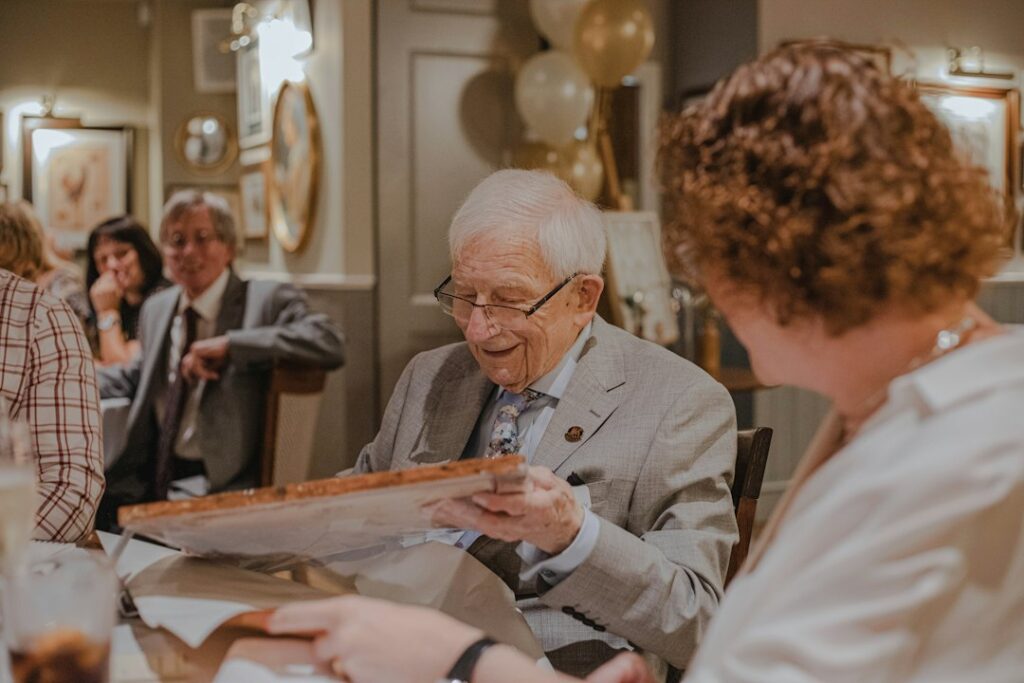
Why should family members participate in assisted living events?
Family participation helps residents stay connected, recognized, and emotionally supported. Events also give relatives a clearer understanding of daily life, social routines, and changing needs inside an assisted living community.
An event does not have to be large or formal to be meaningful. A family member might attend a seasonal gathering, share a meal, join a craft activity, listen to music, participate in an educational discussion, or simply spend time with a loved one while others are present.
For families in Dunmore, PA, regular participation can be especially useful during winter weather, when travel conditions, shorter daylight hours, and household responsibilities may make visits less predictable. Planned events provide a dependable reason to maintain contact without requiring every visit to be arranged from scratch.
What kinds of events are common?
Assisted living events generally fall into several categories, and each serves a different purpose.
- Social gatherings: Holiday celebrations, birthday gatherings, themed parties, resident discussion groups, and informal coffee hours.
- Educational programs: Talks about fall prevention, medication safety, nutrition, memory changes, emergency planning, or managing chronic health conditions.
- Recreational activities: Music programs, games, crafts, gardening, exercise classes, movie afternoons, and gentle movement sessions.
- Family-centered events: Shared meals, intergenerational activities, family councils, open houses, and special visitation days.
- Cultural and spiritual programs: Services, readings, seasonal observances, musical performances, and discussions connected to residents’ traditions.
- Community activities: Local speakers, volunteer visits, charitable projects, or programs involving schools and civic groups.
Some events are designed mainly for residents, while others are intended for visitors. Asking about the purpose of an event helps a family member decide how to participate respectfully.
How can a family member prepare before attending?
A short conversation with the staff or event coordinator can prevent confusion. Ask about the date, expected length, location, dress requirements, visitor limits, and whether reservations are needed.
It may also help to ask:
- Is the event indoors or outdoors?
- Will there be loud music, crowds, or strong lighting?
- Does the resident need help getting to the event?
- Are food, drinks, or common allergens involved?
- Can children or additional relatives attend?
- Is photography permitted?
- What should happen if the resident becomes tired or overwhelmed?
Preparation matters because assisted living residents can have different levels of mobility, hearing, vision, memory, and stamina. A celebration that feels simple to one person may be tiring or confusing to another.
During colder months, allow extra travel time and bring suitable outerwear without leaving coats, bags, or mobility equipment in crowded walkways. In warmer weather, ask whether outdoor areas have shade, seating, and easy access to indoor spaces.
What should family members do during an event?
The most helpful role is usually to support the resident’s comfort and independence rather than take control of the experience.
A family member can:
- Arrive early enough to help the resident settle in.
- Introduce relatives or guests by name.
- Sit where the resident can see and hear clearly.
- Encourage participation without pressuring the resident.
- Help with conversation if the resident has difficulty joining in.
- Watch for signs of fatigue, pain, anxiety, or overstimulation.
- Allow staff to manage care tasks that fall within their responsibilities.
- Include the resident in choices, such as where to sit or whether to stay longer.
It is natural to want a loved one to enjoy every part of an event. Still, participation may look different from what the family expects. A resident may prefer to watch rather than join an activity, attend for only 20 minutes, or leave before the main program ends. Those choices can still represent successful engagement.
How can relatives support residents with memory loss?
Residents living with memory impairment may enjoy events but need more structure and reassurance. Familiar faces, simple explanations, and predictable routines can reduce stress.
Use short, clear statements such as, “We are going to the music program now,” rather than giving several instructions at once. If the resident appears uncertain, offer calm guidance without correcting every detail of conversation.
Helpful approaches include:
- Bringing a familiar object, photo, or piece of clothing.
- Sitting nearby during transitions.
- Avoiding quizzes about names, dates, or past events.
- Redirecting gently if the resident becomes upset.
- Taking a quiet break before distress increases.
- Sharing useful observations with staff after the event.

A family member should not assume that withdrawal means the resident is uninterested. Hearing difficulty, poor lighting, fatigue, medication effects, or unfamiliar surroundings may be affecting participation.
What if a family member cannot attend in person?
Missing an event does not mean missing the relationship. A relative may be able to send a short recorded greeting, provide photographs for a memory display, write a note, or arrange a phone or video conversation at a quieter time.
Another option is to ask for a brief description of the event afterward and use it as a starting point for conversation. Questions such as “What music did you hear?” or “Did anyone make something interesting?” may work better than asking whether the resident had a good time.
Families should avoid making promises that may be difficult to keep, especially if work schedules, transportation, or winter weather are unpredictable. Clear expectations are kinder than repeated last-minute cancellations.
How should family members communicate with staff?
Events can reveal useful information about a resident’s well-being, but one gathering should not be treated as a complete assessment. A resident may be quiet because of tiredness that day or unusually social because the activity matches a personal interest.
Afterward, share specific observations rather than broad judgments. For example:
- “The resident seemed unable to hear conversation from the side of the room.”
- “The resident became tired after standing for ten minutes.”
- “The resident participated more when seated with familiar people.”
- “The resident seemed uncomfortable with the background music.”
Staff may also provide context about routines, dietary needs, mobility concerns, or recent changes in behavior. Communication should remain respectful and private, especially when discussing health information around other residents or visitors.
What are common mistakes to avoid?
Family members sometimes focus so heavily on taking photographs, greeting other guests, or making the event look successful that the resident’s comfort becomes secondary. Photos should never replace conversation or rest.
Other avoidable problems include arriving without checking visitor rules, bringing food without asking about dietary restrictions, insisting that a resident participate, or discussing sensitive medical matters in a public area.
It is also unhelpful to compare one resident’s participation with another person’s. Abilities, personalities, health conditions, and preferences vary widely.
How can events become a regular part of family involvement?
Choose a realistic pattern instead of trying to attend everything. Some relatives may attend one event each month, while others may participate during major holidays or educational programs that match a specific concern.
A simple family plan can identify:
- Which events the resident enjoys most.
- Who can provide transportation or accompaniment.
- Which relatives should receive updates.
- What signs indicate that the resident needs a break.
- How the family will stay connected when attendance is not possible.
The most useful participation is consistent, respectful, and adapted to the resident’s abilities. An event can be a social outing, a source of practical information, or simply a comfortable setting for being together. The purpose is not to make the resident perform or appear cheerful. It is to support connection in a way that fits the person’s comfort, dignity, and daily life.
