
For residents of Dunmore, PA, integrative therapies may offer additional ways to support comfort, mobility, emotional health, sleep, and social connection in an assisted living setting. These approaches are generally used alongside regular medical care, not as replacements for prescribed treatment.
Integrative care focuses on the whole person. It may consider physical symptoms, mood, personal preferences, cultural traditions, daily routines, and the environment in which a resident lives.
What are integrative therapies in assisted living?
Integrative therapies combine standard health care with selected complementary practices that may support a resident’s goals. The term does not mean that every “natural” treatment is safe, effective, or appropriate for older adults.
Common examples include:
- Guided breathing, meditation, or relaxation exercises
- Music-based activities
- Gentle chair yoga, tai chi, or stretching
- Therapeutic massage when medically appropriate
- Art, gardening, or sensory activities
- Aromatherapy used cautiously
- Acupuncture provided by a properly qualified practitioner
- Pet or animal-assisted activities under controlled conditions
- Mindfulness programs and other approaches that reduce stress
A therapy may be considered integrative when it is planned as part of a broader care approach. For example, a resident with arthritis might continue prescribed pain treatment while also using gentle movement, music, heat approved by the care team, or relaxation exercises.
Which therapies are most practical for older adults?
The most practical options are usually those that can be adapted to a resident’s strength, balance, cognition, hearing, vision, and medical needs. Activities do not need to be complicated to be useful.
Music-based activities can include listening sessions, singing, rhythm exercises, or familiar songs from a resident’s earlier life. Music may encourage participation and provide a way to express emotion, especially for someone who has difficulty finding words.
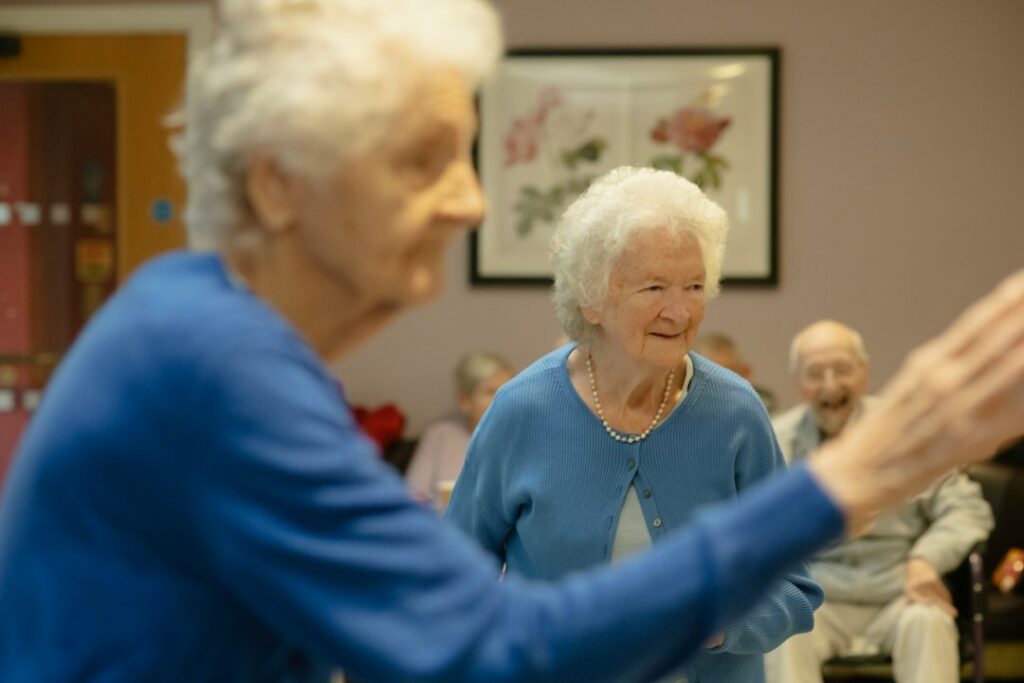
Gentle movement may involve seated stretching, slow range-of-motion exercises, tai chi, or modified yoga. These activities can support flexibility and body awareness, but they should be adjusted for fall risk, joint limitations, osteoporosis, dizziness, and surgical recovery.
Relaxation practices may include paced breathing, guided imagery, prayer or spiritual reflection, and quiet sensory breaks. These approaches can be useful before sleep, during periods of worry, or before a stressful appointment.
Creative therapies such as painting, crafts, journaling, and gardening provide structure and meaningful activity. The goal is participation rather than artistic skill.
Massage, acupuncture, and similar hands-on approaches require more careful screening. Skin fragility, blood-thinning medication, implanted devices, neuropathy, wounds, infection risk, and other medical conditions may affect whether a treatment is suitable.
Can integrative therapies help with pain or sleep?
They may help some residents manage discomfort, tension, or sleep difficulties, but results vary. Integrative therapies should not be presented as cures or as substitutes for medical evaluation.
For pain, a care plan might include gentle movement, relaxation, music, massage, or other approved approaches alongside medication and physical therapy. A new or worsening pain pattern still needs medical attention because pain can signal an injury, infection, medication problem, or another condition requiring treatment.
For sleep, helpful options may include a consistent bedtime routine, calming music, breathing exercises, reduced evening stimulation, and daytime activity. Herbal sleep products and supplements deserve special caution. Some can interact with blood thinners, diabetes medicines, sedatives, blood-pressure drugs, or other prescriptions.
In a residential setting, sleep concerns should also prompt a review of possible causes such as nighttime pain, urinary symptoms, depression, breathing problems, medication side effects, or an uncomfortable room temperature.
Are these therapies safe for residents with dementia?
Some can be appropriate, but they must be individualized. Familiar music, simple sensory activities, hand massage when allowed, calm conversation, and repetitive creative tasks may be comforting for certain residents.
The approach should match the person’s communication style and cognitive ability. A resident may become distressed by unfamiliar touch, strong scents, crowded group activities, or instructions that are too complicated.
Staff and family members should watch for signs of discomfort, including pulling away, agitation, facial tension, changes in breathing, refusal, or sudden withdrawal. Lack of spoken objection does not always mean that a resident is comfortable.
A therapy should be paused if the resident appears frightened, confused, dizzy, short of breath, or physically uncomfortable.
What should residents and families ask before trying a therapy?
Before participation, ask practical questions about the activity and the person providing it:
- What is the intended purpose?
- Who will lead or supervise the session?
- What training or credentials does that person have?
- Can the activity be adapted for limited mobility or memory loss?
- Are there risks related to medications, skin conditions, falls, surgery, or chronic illness?
- How will consent be obtained?
- What happens if the resident wants to stop?
- Will participation or outcomes be documented in the care plan?
- Is the therapy included in regular programming, or does it involve an additional charge?

A resident should be able to decline. Participation should not be treated as proof of cooperation, and a resident should not lose access to ordinary care for choosing not to participate.
What about herbs, vitamins, and other supplements?
Supplements require more caution than many residents expect. “Natural” does not automatically mean safe, gentle, or compatible with prescription medicine.
Some products may increase bleeding risk, affect blood pressure or blood sugar, cause drowsiness, or change how another medication works. Product strength and purity can also vary.
Residents should tell the prescribing clinician, pharmacist, and assisted living staff about vitamins, herbal products, teas used for health purposes, and over-the-counter remedies. In an assisted living residence, medication and supplement handling may be governed by the resident’s assessment, medication orders, and facility procedures.
No supplement should be started, stopped, or substituted for prescribed treatment without appropriate medical guidance.
How does Pennsylvania assisted living oversight fit in?
Pennsylvania distinguishes assisted living residences from personal care homes and nursing facilities. Assisted living residences are licensed and regulated by the Pennsylvania Department of Human Services, with requirements intended to protect residents’ health, safety, and well-being.
Integrative activities still have to fit within the residence’s responsibilities. A program should not interfere with medication administration, emergency response, infection control, mobility assistance, dietary needs, or the resident’s documented care plan.
A residence may offer activities directly or use outside practitioners. Either way, residents and families can reasonably ask how the activity is supervised, how safety concerns are handled, and how changes in a resident’s condition will be communicated.
How can local seasonal conditions affect participation?
Seasonal weather can influence which therapies are practical. In a community with cold winters, snow, ice, and shorter daylight hours, indoor movement groups, hallway walking, music programs, and seated activities may be especially useful when outdoor activity is limited.
During warmer or humid periods, hydration, ventilation, shade, and fatigue monitoring matter. Residents who are sensitive to temperature changes may need shorter sessions and more frequent rest.
The setting should also account for transportation and accessibility if an outside practitioner is involved. A therapy is less helpful if attending it creates excessive fatigue, confusion, or fall risk.
What does a balanced approach look like?
A balanced approach begins with the resident’s goals. One person may want less anxiety before bedtime. Another may want to move more comfortably, reconnect with music, or have a meaningful activity after losing the ability to live independently.
The safest plan is specific, modest, and observable. It identifies the therapy, the intended benefit, the precautions, and the signs that it should be changed or stopped. Integrative therapies work best when they complement—not compete with—medical care, personal choice, and the everyday support residents need.
